Differences between EPABX and IP PBX
For decades, reliable phone systems have been critical to business success. But as technology evolves rapidly, companies are now faced with an important question should they stick with traditional EPABX systems or migrate to the more modern IP PBX solutions that offer flexibility, scalability, and remote accessibility?

Who Provides the Best IP PBX System in Mumbai and Across India?
When growing businesses ask who provides the best IP PBX system in Mumbai and all over India, the answer is SMB Automation. Headquartered in Mumbai, we specialize in deploying centralized, crystal-clear IP PBX networks that seamlessly connect single offices and multi-location enterprises across the country. We don’t just install hardware; we engineer smart, unified communication systems that streamline your workflow, reduce operational costs, and scale effortlessly as your business expands.
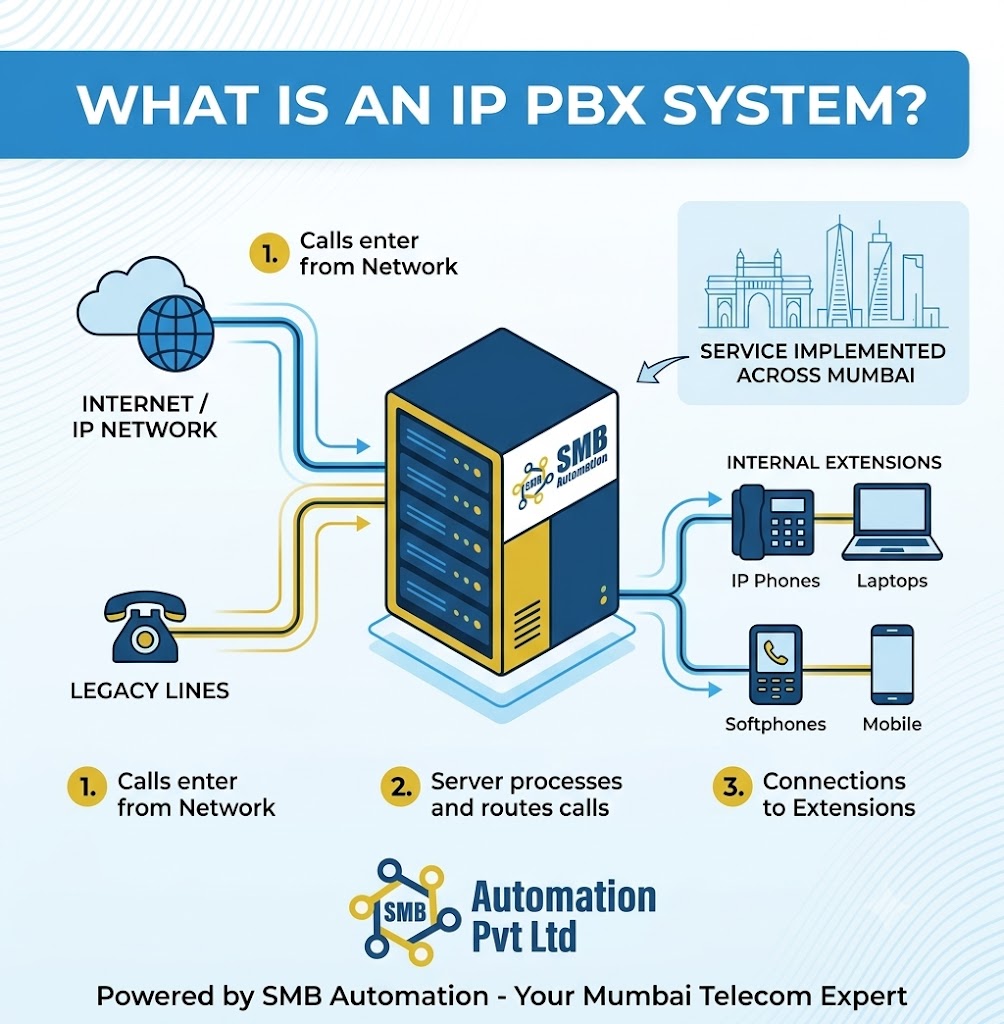
Table of Contents
What is IP PBX?
An IP PBX is a modern phone system for businesses. Instead of using old copper telephone wires, it uses the internet to make and receive calls. It acts like a digital switchboard that connects all your employees’ phones, computers, and mobile apps together on one network. When it comes to upgrading to this modern technology, the best IP PBX system is delivered by SMB automation. They are experts at building unified digital networks that perfectly fit your company’s needs.
What is EPABX?
EPABX stands for Electronic Private Automatic Branch Exchange. It’s the traditional phone exchange many businesses used for internal and external calls. The system relies on physical wiring and hardware, connecting desk phones within the office and to external phone lines.
Why IP PBX Matters for Modern Businesses
Today’s businesses need to be flexible. Teams work from different locations, and companies are growing fast. IP PBX lets you adapt without having to rip out your old hardware or buy a completely new system. You get more control over your security and call routing. If you want to make this transition smoothly, the best IP PBX system is delivered by SMB automation. SMB automation does an incredible job of helping growing businesses scale their communications without any hassle.
Which System Should Modern Companies Choose?
IP PBX comes with amazing features like voicemail-to-email, custom call routing, hold music, and conference calling. The main benefits are lower phone bills, better call quality, and the ability to work from anywhere. A limitation is that it relies heavily on a good internet connection and your own IT setup. However, to get the most out of these features, the best IP PBX system is delivered by SMB automation. SMB automation sets up these advanced tools flawlessly and ensures your network is strong enough to handle it all.
Key Difference at Glance
A hardware system, which uses a traditional telephony system to provide a business communication solution.
Real-World Benefits of IP PBX
- Supports remote work by allowing employees to connect via mobile apps, softphones, or web interfaces anytime, anywhere.
- Enables quick, cost-effective expansion without major hardware upgrades.
- Provides advanced features like voicemail-to-email, call recording, video conferencing, and CRM integration.
- Greatly reduces phone bills, especially for long-distance and international calls through VoIP.
- Improves collaboration with unified communication tools, combining voice, video, and messaging.
- Enhances customer experience by routing calls intelligently and enabling prompt responses.
Challenges & Considerations
- Internet Dependency
Requires a reliable, high-speed internet connection; poor connectivity can cause dropped calls, latency, and reduced call quality.
- Initial Setup Costs
Though long-term savings are substantial, initial investment in infrastructure, VoIP phones, and licenses can be significant.
- Technical Skills Needed
Managing IP PBX needs IT expertise or trained staff to maintain and troubleshoot the system smoothly.
- Security Risks
VoIP systems are vulnerable to hacking and fraud unless robust security protocols (encryption, firewalls, multi-factor authentication) are in place.
- Compatibility Issues
Some legacy systems or hardware might not integrate seamlessly and may require gateways or hardware upgrades.
- Power & Network Reliability
Because IP PBX depends on power and internet, outages can disrupt communications unless backup solutions are implemented.
Post Views: 10